
The Real Reason Your Metabolism Slows After 40
You're eating the same way you always have, but the scale keeps drifting up—and the easy fixes from your twenties no longer work. It's tempting to blame a "broken" metabolism. But the science tells a more useful story, and it's not the one you've heard. The real reason isn't a metabolic cliff at 40. It's something you can actually change.
The Myth: A Metabolic "Cliff" at 40
For decades the conventional wisdom was that metabolism falls off a cliff once you hit your forties. The largest study ever conducted on human metabolism upended that idea. In 2021, researchers published in the journal Science an analysis of more than 6,400 people, ranging from infants to age 95, across dozens of countries. As summarized by Lingo by Abbott, metabolic rate stays remarkably stable from about age 20 to 60—and only begins a slow decline of roughly 0.7% per year after 60. The cliff most people fear at 40 simply isn't in the data.
So if your resting metabolism barely changes between 20 and 60, why does weight gain feel so much easier after 40? The answer points to what's happening in your muscles and your daily routine.
The Real Reason: Muscle Loss and Lost Movement
Starting around age 30, adults lose an estimated 3–5% of muscle mass per decade unless they actively work to maintain it—a process called sarcopenia. Muscle is metabolically active tissue: each pound burns several times more calories at rest than fat does. Lose muscle quietly over a decade, and your body burns fewer calories around the clock, even though your "metabolism" on paper looks fine.
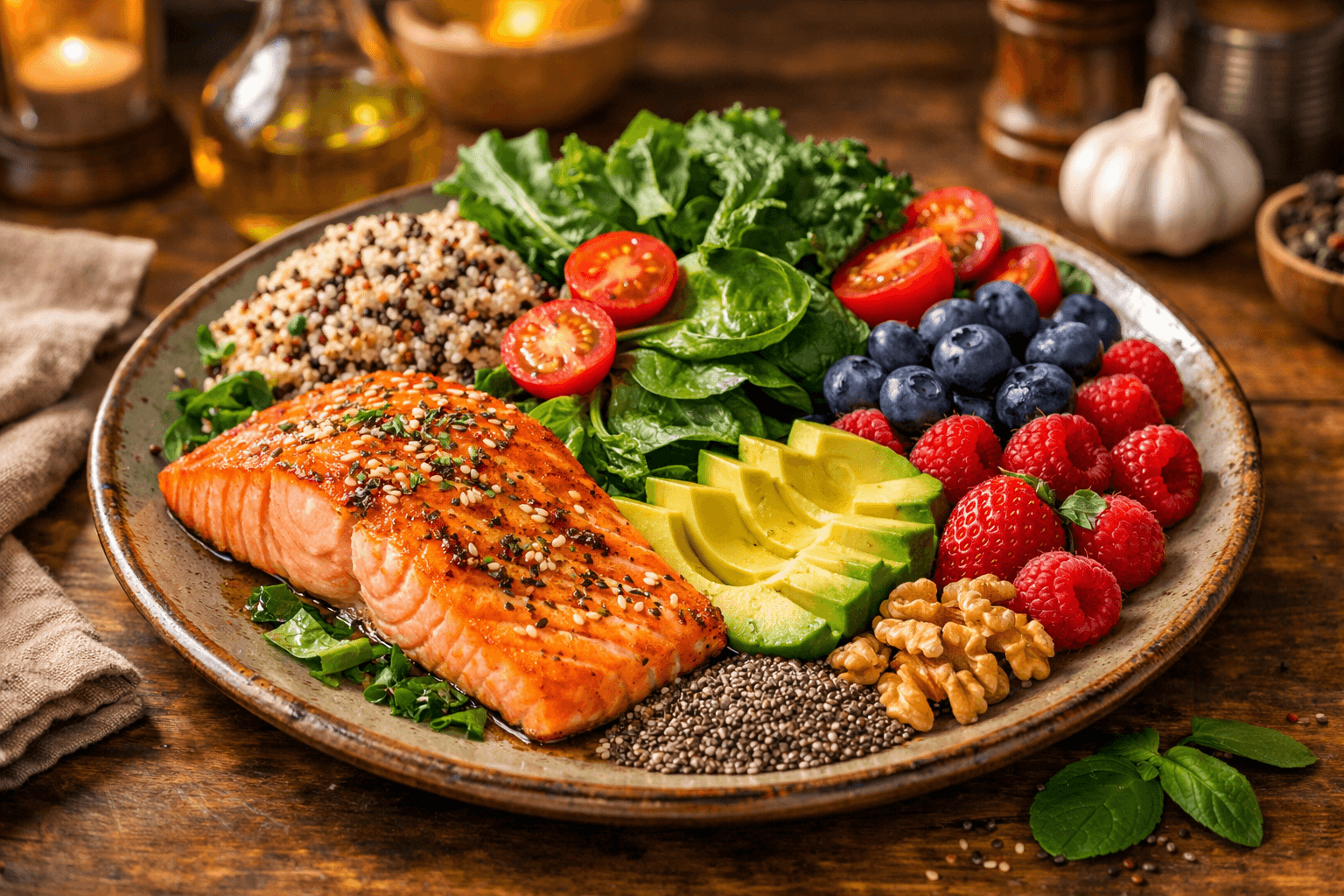
Two other shifts stack on top of muscle loss. First, daily movement—what researchers call NEAT, or non-exercise activity—tends to drop as careers, commutes, and family life lead to more sitting. Second, hormonal changes in midlife, especially the decline in estrogen around menopause and testosterone in men, change how the body stores fat and builds muscle. As Paloma Health notes, the midlife slowdown is gradual and driven mainly by muscle loss, hormonal changes, and lifestyle—not an abrupt metabolic collapse.
| What Changes After 40 | Effect on Calorie Burn | What Actually Helps |
|---|---|---|
| Muscle loss (sarcopenia) | Lowers resting calorie burn | Resistance training 2–3x/week |
| Less daily movement (NEAT) | Fewer calories burned all day | 7,000–10,000 steps; stand more |
| Hormonal shifts | More fat storage, less muscle building | Protein, sleep, stress control |
| Lower protein intake | Muscle harder to preserve and rebuild | 25–30g protein per meal |
Why "Just Eat Less" Backfires
The instinct after 40 is to slash calories. But drastic cutting often makes things worse: with too little fuel, the body breaks down muscle for energy, and losing muscle slows your burn even further. Repeated cycles of losing and regaining weight without strength training can leave you burning meaningfully fewer calories than someone who held a steady weight. The takeaway is counterintuitive but liberating—protecting muscle matters more than punishing yourself with restriction.
How to Fight Back—Naturally
1. Lift to Rebuild Your Engine
Resistance training is the single most effective tool for raising resting metabolic rate, because building muscle directly increases the calories you burn at rest. Cardio is excellent for your heart, but strength training is what rebuilds the metabolic engine. Two to three sessions a week is enough to start reversing the trend.
2. Prioritize Protein
Older muscle needs more protein to rebuild—roughly 25–30 grams of high-quality protein per meal, versus about 20 grams for younger adults. Protein also requires more energy to digest and keeps you fuller. Spread it across breakfast, lunch, and dinner rather than loading it all at night. Our guide to the top 5 foods for weight loss after 50 is a useful starting point.
For a complete overview of how to support your body's natural processes, read our Official Guide on How BurnSlim Enhances Fat Burning.
3. Move All Day, Not Just at the Gym
Walking, gardening, taking the stairs, and standing more all add up. These small movements often burn more total calories than a single workout. Pairing them with supplements is covered in our article on best practices for combining BurnSlim with light exercise.
Where BurnSlim Fits In
Habits do the heavy lifting—but metabolic support can help you stay consistent. BurnSlim combines thermogenic ingredients that assist fat metabolism with nutrients that support steady energy. Green tea extract and L-carnitine are associated with fatty-acid oxidation, chromium supports normal glucose metabolism, and cayenne adds a gentle thermogenic effect. Used alongside resistance training and adequate protein, it's a complement to a muscle-first strategy—not a substitute for it. To see how it stacks up, read our BurnSlim vs competitors comparison.
Frequently Asked Questions
Does metabolism really slow down at 40?
The dramatic "cliff" is a myth. A large 2021 study in Science found metabolic rate stays stable from 20 to 60. What feels like a slowdown after 40 is mostly muscle loss and reduced activity.
Why do I gain weight after 40 even eating the same?
Adults lose roughly 3–5% of muscle per decade after 30 unless they strength train. Less muscle plus less movement means fewer calories burned at rest, so old habits now lead to gradual gain.
What is the best way to boost metabolism after 40?
Resistance training to rebuild muscle, protein at every meal, staying active all day, quality sleep, and stress management—optionally supported by a metabolic supplement.
Does eating less fix a slow metabolism?
Not on its own. Drastic cutting can trigger muscle loss and an adaptive slowdown. Preserving muscle with protein and training is more effective than simply eating less.
How does BurnSlim support metabolism?
It pairs thermogenic ingredients like green tea extract and L-carnitine with chromium and fiber to support fat metabolism and steady energy alongside a muscle-preserving routine.
Conclusion
Your metabolism isn't betraying you at 40—your muscle and your movement are quietly slipping, and the fixes you used at 25 no longer match the problem. The good news is that the real cause is the one you can control. Rebuild muscle, eat enough protein, keep moving, and support the process. Do that, and a "slow metabolism" stops being your story.
For a deeper look at the metrics behind this, explore our guide on understanding metabolic age and how to improve it.